

A sloping path to success
Reinforcing the paradoxical victory in failure

I’ll confess I’ve not been watching the Winter Olympics, but I have been receiving the headlines via friends and social media. When my sister received a news notification on her phone on Sunday reporting that Lindsey Vonn had crashed and been injured in her downhill race, she audibly gasped and turned her phone around to show us the alert. I had never heard of Lindsey Vonn before, but, like Daisy Buchanan, I too quickly became obsessed with learning all I could about her and this against-all-odds comeback.
Lindsey Vonn is one of the most decorated and dedicated alpine skiers of all time. With a career spanning over twenty-five years, her list of achievements is extensive. Since her World Cup debut at age 16, she’s had eighty-four World Cup wins, received eight World Championship medals and three Olympic medals - including a gold for her downhill skiing in Vancouver 2010.
Established over ten years ago, the Lindsey Vonn Foundation has been empowering girls from underserved communities with scholarships and “#STRONGgirls” camp programs. Under a photo of the founder on the foundation’s website, it says: ‘Lindsey’s ski career has taught her to never give up.’
In 2019, aged 34, Vonn retired from professional skiing in order to focus on maintaining good physical health after the numerous injuries she’d incurred in previous years. But in 2024, that ‘never give up’ mentality saw her return to the slopes. A then 40-year-old Vonn had undergone successful knee surgery, alleviating the pain that had dictated (what she thought would be) the end of her career. The opportunity to finish things the way she wanted, the lure of Cortina d’Ampezzo, where she earned her first podium place, and the chance to make history as the oldest woman to compete in Alpine racing in Olympic history proved irresistible.
It had all been leading up to the 2026 Winter Olympics in Cortina, where Vonn had vowed to retire again after ending things ‘once and for all’ on one of her favourite slopes. Just a week before in her final race before the Olympics, she tore her ACL. A familiar injury for Vonn, but one that cast doubt on her ability to compete. In the days leading up to the race, Vonn said even reaching the start line would be “a pretty good comeback if I can pull it off”.
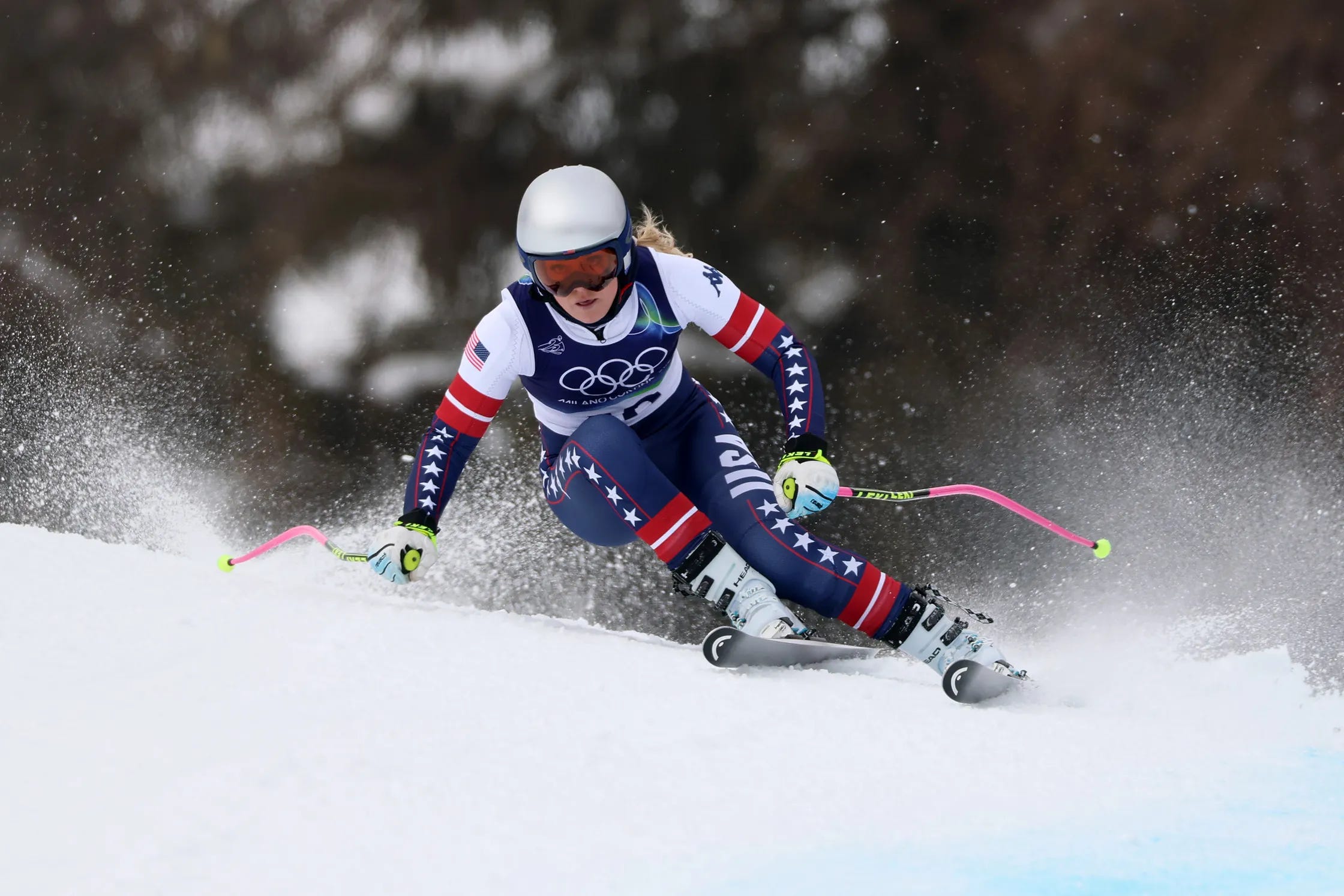
Thirteen seconds into her race, Vonn clipped a gate that sent her tumbling at speed down the mountain, resulting in a crash and a left leg fracture. All dreams of podiums, medals and finish lines were utterly dashed.
In the news articles and opinion pieces I soon began to scour, I found a collective shaking of heads, waggling of fingers and loud judgmental overtones. Luck finally failed Lindsey Vonn! Vonn should never have competed in the lead-up to the Olympics! It was ego!
Was the effort, the attempt, and the commitment not tremendous and admirable enough in isolation? It seemed not. Only the securing of a medal would equate to success. Of course, I understand the stakes and parameters of success/ failure are more binary in the context of competitive sports. But the idea that Vonn ‘hadn’t pulled off’ her comeback was unpalatable to me.
‘Failure’ cannot be seen as a stepping stone for success only in hindsight. Only if it sets you onto a new, previously unforeseen path. Only if it ends up leading you somewhere better. Everything we tell ourselves about how it’s the climb that’s most important, or that experience gained along the way is more valuable, falls apart when we’re unable to show the same grace or encouragement for others when facing feats both great and small.
Whether Vonn will ever compete professionally again, out of choice or physical necessity, is unknown right now. Vonn herself has said she has no regrets: “Knowing I stood there having a chance to win was a victory in and of itself.” Sharing an update on her Instagram two days ago, she wrote that ‘Life is too short not to take chances on yourself. Because the only failure in life is not trying.’ This is the lesson - the learning, the important bit and only takeaway of relevance.
There are ten more days of the Winter Olympics. Every Olympian should leave Milan brimming with pride for themselves, regardless of the outcome.
