

Consider me a complete Lunatic
I’ve gone crazy for the moon

Did you know the word ‘lunatic’ derives from the Latin “luna”, meaning moon? It refers to an intermittent state of insanity influenced by the moon. With that in mind, Artemis II has arguably sent the majority of us into a collective state of utter lunacy. Isn’t reclaiming language fun?
Luna was the divine embodiment of the moon in Roman mythology. She was the female counterpart to the sun God, Sol. In Greek mythology, Selene was considered the personification of the moon, and Helios of the sun. They were Titans who were at the helm before the Olympians ascended to power. Zeus, the mighty King of the Gods, overthrew his Titan father, Cronus (Selene and Helios’ uncle), to rule over Greece from Mount Olympus, with eleven other deities (those of divine status) by his side. Some of these were Zeus’ children, such as twins Artemis and Apollo. Artemis was a hunting goddess who liked to roam the wilderness with an entourage of nymphs (minor female deities found in natural places, like forests, water, and mountains). Artemis’ Roman mythological counterpart was Dianna. Eventually, Artemis became known as the “lunar deity” who represented the moon. As her twin brother was associated with the sun, her role was to complement and balance.
NASA determined that Artemis would be a fitting name for a successive program to the original Apollo lunar landing. Not only for historical continuity, but also as a nod to their broader goals of taking the first woman to the moon. Nice.
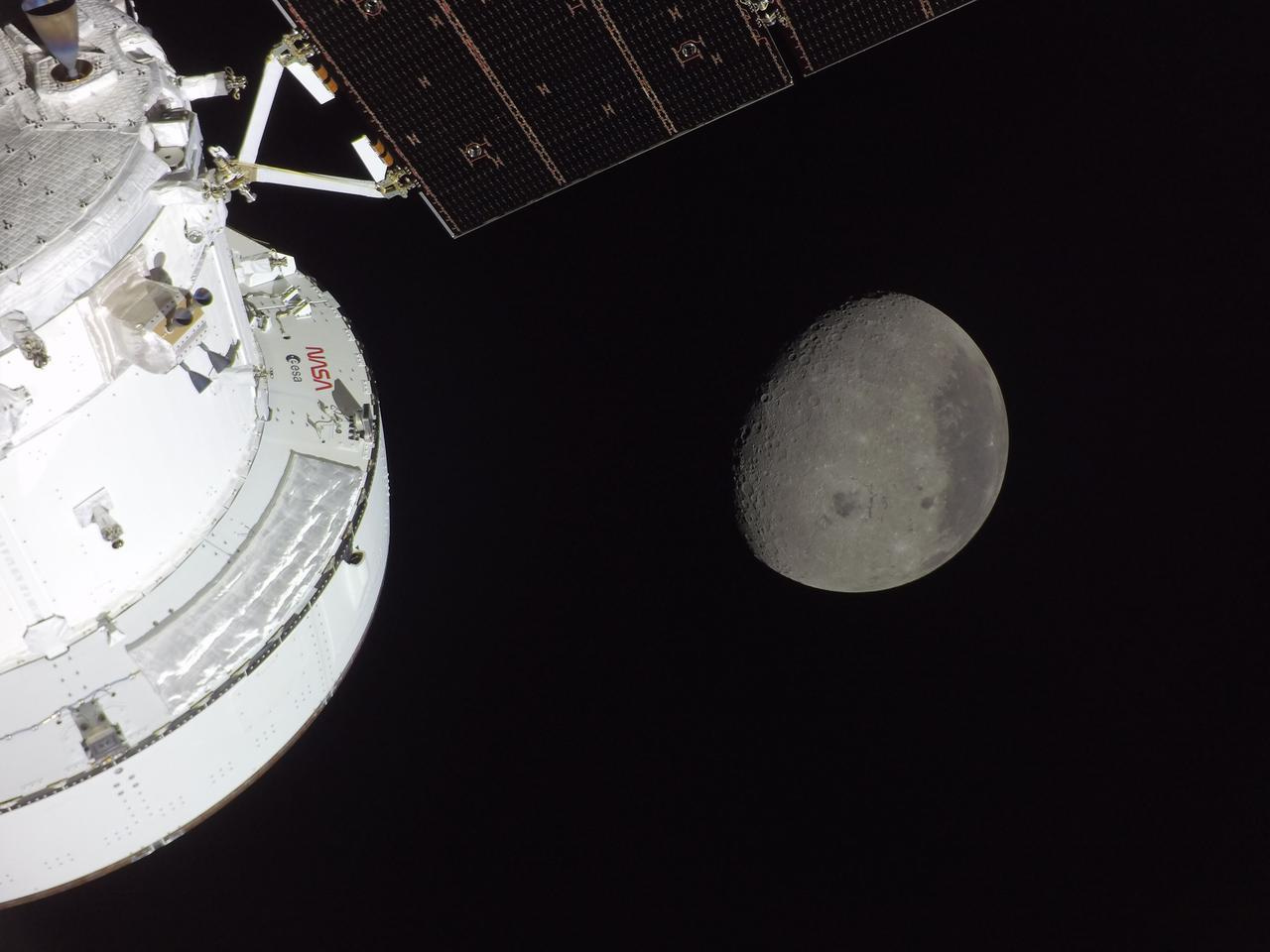
Artemis II launched into space on 1st April. Aboard was a team of four, including the first female, first black, first non-U.S. citizen, and the oldest astronaut to orbit the moon. As serendipity would have it, that day, the moon was full. Affectionately known as a “pink” moon, the fourth full moon of the year is named for the early-blooming wildflowers found at that time. The popularised nicknames we have for each full moon of the year come from Native American culture. Though many other cultures have their own variations.
This specific ten-day mission will cost the U.S. $4 billion, as part of the wider ongoing Artemis program that will cost $93 billion. I’ve seen pushback on the costs, and no doubt, it’s a big bill for taxpayers to pick up. Trump has proposed cutting NASA’s funding in future, though he also wants to allocate $1 billion to cancel federal leases for two offshore wind farms. I’m not sure he’s the best to set an example of where money is best spent.
But money makes the moon go round. I wrote last week about the closure of the Metaverse, a $80 billion failed vanity project, I mean venture. Sora, the AI video-generation app, was costing OpenAI $15 million a day before it similarly got the boot. Artemis is an obscene cost, I’m not disputing that. But if we’re going to start pointing fingers in the direction of who is most wasteful, I’ll start with the greedy tax-avoiding capitalists set on gobbling up all the energy resources on Earth with their evil AI data centres. Anyway, back to the glorious moon.
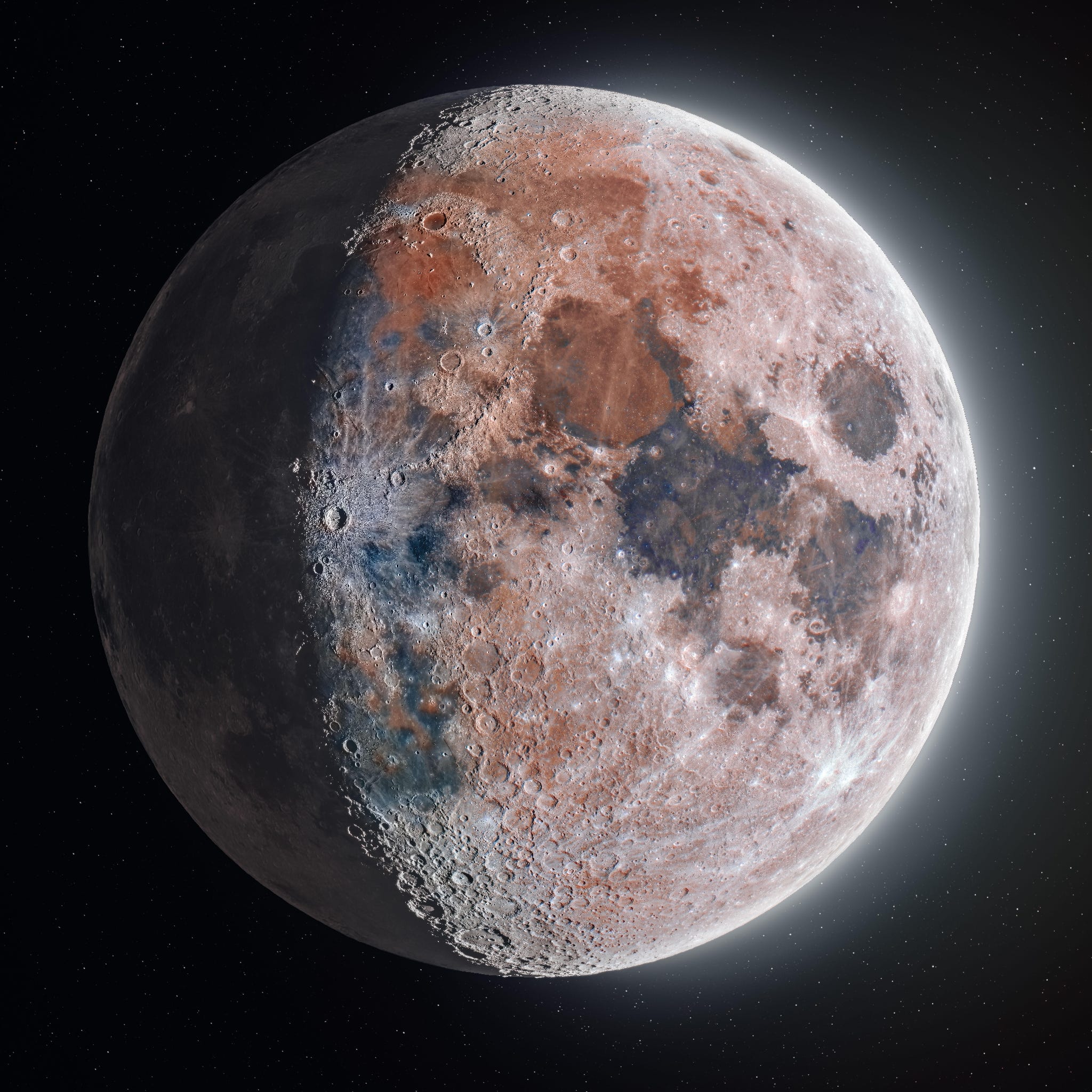
There are some crazy photos doing the rounds on social media. These are NASA’s official images. We didn’t send content creators into space - we sent astronauts. Yet these photos of the moon and the world seen from afar will forever be one of the strangest things we can try to comprehend as humans here on this strange little planet. Other photos you might have seen are from astrophotographers Andrew McCarthy and Connor Matherne, taken years ago as part of a project to produce the most detailed shot of the moon they could manage. The end result is an image of over 200,000 photos stitched together. Using a ‘photo-stacking’ technique, they were able to enhance detail and colour by combining raw, high-resolution lunar imagery with data from a modified telescope setup. Of the unusual colours in the photos, McCarthy explains -
“The colour in this image is real, but presented with increased saturation so it is easily visible to our eyes. The reddish tones demonstrate areas rich in iron and feldspar, while the bluish areas are spots where the regolith is rich in titanium. Oxidisation from the Earth’s atmosphere makes the colors appear like they do.”
My lunar-gazing will conclude with a poem I wrote, perhaps eight years ago. In 2018, I was twenty-two and navigating my way through and out of a long, drawn-out period of depression. I have multiple collections of unpublished poems from that time. They are mostly metaphorical of nature, reflecting patterns and behaviours in a way that gave me a sense of belonging when I needed it most.
Flaws, Freckles and Imperfections
It was a full moon that night.
The evenings had begun to draw in sooner,
summer was fading.
It was still too hot to sleep comfortably, so the window was open.
In came the stern gust of late August twilight,
ruffling the curtains in its path.
Tucked up in bed, a little girl had a question to ask her father
as he came to wish her a good night’s sleep.
Can anyone truly
Love someone in full
In spite of their flaws,
Their freckles and imperfections too?
Without even a doubt,
the girl’s father replied
But of course!
For even the moon
With its dark spots and speckles
Lights up the sky
In the shadows of the dark.
From her bed she could see that her father was right.
The moon shone proudly, with its head held up high.
The girl smiled and rolled over, closing her eyes,
While the moon was on guard, watching on all night.
